


Views: 0 Author: Site Editor Publish Time: 2026-03-30 Origin: Site


Industrial machines rarely operate at the same speed as the electric motors that power them. Most equipment requires lower rotational speed combined with higher torque in order to operate smoothly and safely. This practical requirement is exactly why engineers often ask a simple but important question: helical gear reducer use for what types of machines? At Taixing, we design gear reduction systems that allow motors and industrial equipment to work together efficiently. By converting high-speed motor rotation into controlled mechanical output, helical gear reducers support reliable operation across a wide range of industries. Understanding where these reducers are used and why they perform well in certain applications helps equipment designers and operators select the right transmission solution for their systems.
Mechanical transmission requirements vary significantly from one machine to another. Some equipment operates at high speeds with relatively light loads, while other machines move heavy materials or operate under constant industrial pressure.
Because of these differences, transmission systems must be selected according to the operating conditions of the equipment. A reducer that works well in a conveyor system may not be ideal for a heavy crusher or mining machine.
Helical gear reducers are versatile because their design allows them to perform reliably across many different mechanical environments.
Several key factors determine whether a helical gear reducer is suitable for a particular application.
Speed requirements influence the reduction ratio needed to match motor output with machine operation. Load conditions determine how much torque the reducer must deliver. Noise levels can be important in indoor production environments, and duty cycle affects how durable the transmission system must be.
Helical gear reducers perform well in many of these conditions because they combine smooth motion transmission with strong load capacity.
The angled tooth design of helical gears allows them to engage gradually rather than suddenly. This gradual contact reduces vibration and distributes mechanical load more evenly.
Because of these characteristics, helical gear reducers are often preferred for applications that require stable and continuous motion.
Conveyor systems are widely used in manufacturing plants, logistics centers, and mining operations. These systems must move materials at controlled speeds to ensure consistent production flow.
If conveyor speed fluctuates, the entire production process may become unstable. A gear reducer ensures that motor speed is properly converted into steady conveyor movement.
Material handling equipment often carries products or raw materials that must be transported carefully. Sudden mechanical shock can cause materials to shift, spill, or become damaged.
Helical gear reducers provide smoother motion because their gear teeth engage gradually. This smoother operation protects both the mechanical system and the materials being transported.
Inline helical gear reducers are particularly suitable for conveyor systems because the input and output shafts are aligned along the same axis.
This configuration allows the reducer to connect directly to the motor and conveyor drive shaft, simplifying installation and improving mechanical efficiency.
Automatic production lines rely on consistent and repeatable mechanical motion. Machines such as labeling equipment, filling machines, and packaging conveyors must operate continuously during production cycles.
Helical gear reducers help maintain consistent speed and torque output, ensuring that production processes remain stable.
Production line equipment is often designed with limited internal space. Transmission components must therefore fit within compact mechanical structures.
Inline helical gear reducers provide an efficient solution because their coaxial shaft design allows them to be installed easily within machine frames.
Packaging systems depend on precise timing between multiple machines operating in sequence. If one machine runs too fast or too slow, the entire production line may be affected.
Helical gear reducers help maintain consistent motion across production equipment, improving overall efficiency.
Food processing and beverage production facilities often require quieter and smoother equipment operation. Excessive vibration can affect product quality and create undesirable working conditions.
Helical gear reducers are known for their low vibration and low noise characteristics. These features make them well suited for light industrial environments.
Many food processing machines start and stop repeatedly during production cycles. Transmission systems used in these environments must withstand frequent operation without losing efficiency.
Helical gear reducers distribute mechanical loads evenly across gear teeth, which improves durability during repeated operation.
Original equipment manufacturers often prefer modular transmission components because they allow flexible equipment design.
Helical gear reducers designed with modular structures can be adapted to different machines, making them ideal for equipment manufacturers building production systems for various industries.
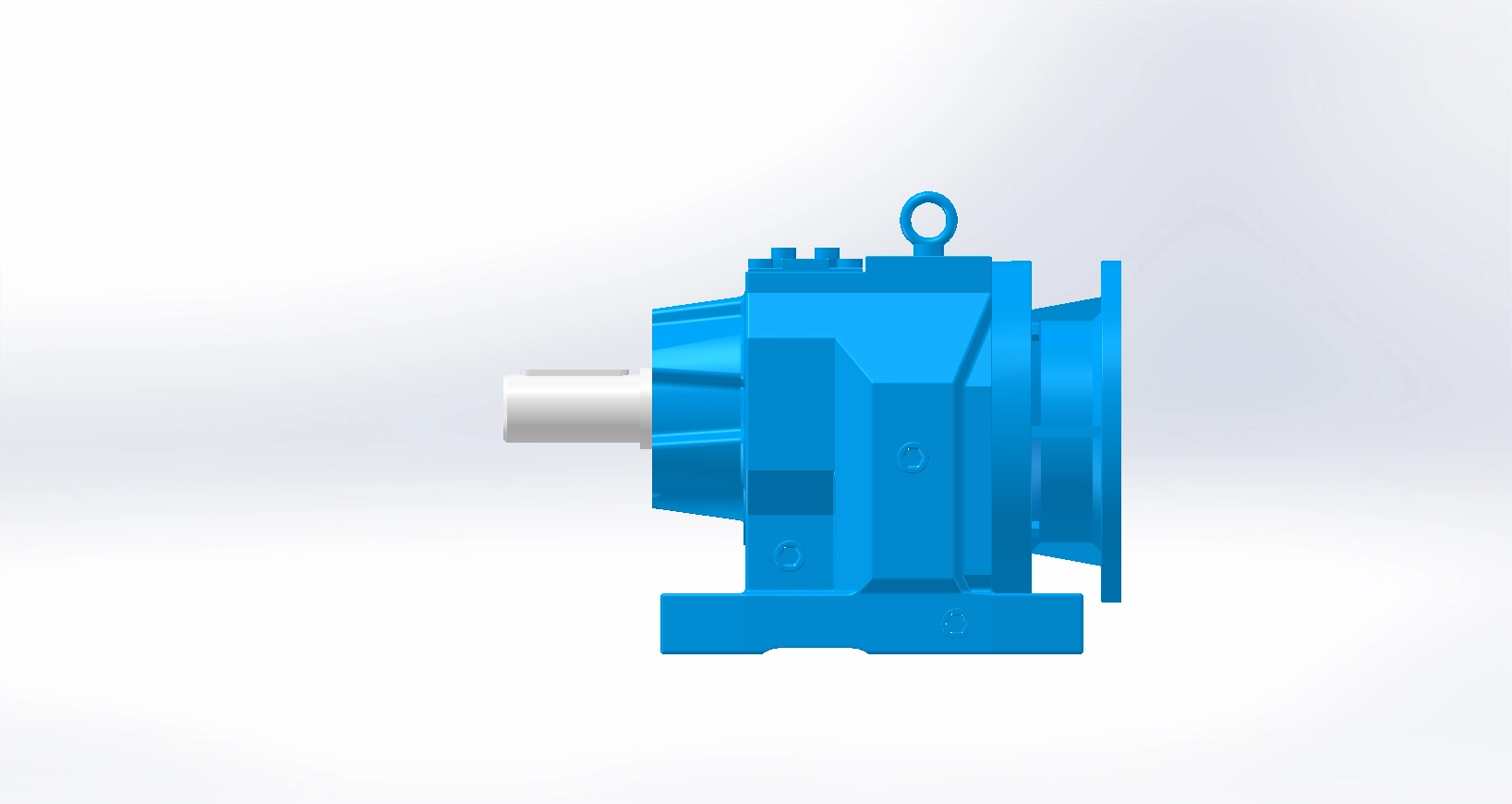
Heavy industries such as mining, quarrying, and cement production involve machines that handle extremely heavy loads.
Crushers, grinders, and conveyors used in these industries require powerful torque transmission to move materials efficiently.
Helical gear reducers are capable of delivering strong torque output, making them suitable for these demanding applications.
Industrial equipment in mining or cement environments often operates continuously under challenging conditions. Dust, vibration, and heavy mechanical loads place significant stress on transmission components.
Reducers designed for these industries must be robust and durable. Helical gear reducers are engineered to handle such conditions while maintaining stable performance.
In heavy industrial environments, the quality of gear materials and housing design becomes particularly important.
Strong housing protects internal components, while precision gear manufacturing ensures reliable torque transmission.
Chemical and plastics processing equipment often operates continuously for long periods. Transmission systems used in these environments must deliver stable performance throughout extended production cycles.
Helical gear reducers provide smooth and reliable motion, making them well suited for continuous industrial operation.
Different processing machines require different speed and torque characteristics. By selecting appropriate gear ratios, helical gear reducers can be matched to the specific needs of process equipment.
This flexibility allows engineers to optimize mechanical performance.
Unplanned equipment downtime can cause significant production losses in process industries. Reliable transmission systems help prevent unexpected mechanical failures.
Helical gear reducers are valued for their durability and consistent performance, which helps maintain plant uptime.
Machines operating indoors or in environments with strict noise control standards benefit from the quiet operation of helical gear reducers.
Their smooth gear engagement reduces vibration and acoustic noise.
Energy efficiency is increasingly important in modern manufacturing. Efficient transmission systems reduce energy losses and improve overall equipment performance.
Helical gear reducers provide high mechanical efficiency, making them suitable for many industrial applications.
Industrial machines often require flexible installation configurations. Reducers that support multiple mounting positions simplify equipment design and installation.
Helical gear reducers are commonly available with various mounting options, which allows them to adapt to different machine layouts.
Industry | Typical Machine | Why a Helical Reducer Fits | Main Buyer Concern |
Material handling | Conveyor systems | Stable speed control | Smooth transport of goods |
Packaging | Filling and sealing machines | Precise and repeatable motion | Production efficiency |
Food processing | Mixing and conveying equipment | Low vibration and noise | Product quality |
Mining and cement | Crushers and heavy conveyors | High torque capacity | Durability |
Chemical processing | Pumps and reactors | Continuous operation reliability | Maintenance stability |
When selecting a reducer, engineers should first determine the operating requirements of the machine. This includes the required output speed, load conditions, and torque demand.
These parameters help identify the most suitable reducer configuration.
Mechanical layout plays an important role in reducer selection. Knowing the available installation space allows engineers to choose the most practical mounting arrangement.
Inline helical gear reducers are particularly useful when compact design is required.
While gear ratio is an important parameter, other factors such as durability, efficiency, and environmental conditions must also be considered.
A well-designed reducer system should match the complete operating environment of the machine.
Industrial machines require reliable transmission systems that convert motor power into usable mechanical output. From conveyors and packaging lines to heavy industrial equipment, many machines depend on smooth speed reduction and stable torque transmission. The answer to industrial uses of helical gear reducer therefore spans a wide range of industries where durability, efficiency, and smooth operation are essential. At Taixing, we combine advanced manufacturing technology with deep experience in gear reduction engineering to develop reducer systems that support modern industrial equipment. Our product range includes planetary gearboxes, helical gear units, bevel gear reducers, and inline helical gear reducers designed to improve operational efficiency across many sectors. If your machinery requires reliable speed reduction and stable mechanical transmission, Taixing can provide the gear reducer solutions needed to support your application. Contact us to learn more about our gear technology and industrial reducer products.
Helical gear reducers are widely used in industries such as manufacturing, logistics, food processing, mining, chemical processing, and packaging production lines.
Conveyor systems require stable speed and smooth mechanical movement. Helical gear reducers provide controlled speed reduction and reliable torque output, making them ideal for material handling equipment.
Yes. Inline reducers integrate easily with motors and machine frames, making them practical for automated production systems that require compact mechanical layouts.
They offer smooth motion transmission, strong torque capacity, lower noise levels, and reliable operation, which makes them suitable for continuous industrial use.


