


Views: 0 Author: Site Editor Publish Time: 2026-03-27 Origin: Site


Machines that operate in modern production environments often require more than just rotational power. They need controlled speed, stable torque output, and reliable power transmission that can withstand continuous industrial operation. This requirement is why a helical gear reducer is widely used in mechanical systems across manufacturing, material handling, and process industries. At Taixing, we focus on developing advanced gear transmission technology that improves equipment efficiency and operational reliability. By combining precise gear manufacturing with strong engineering capability, Taixing provides reducer solutions that help industrial machines achieve smoother performance and longer service life. Understanding what a helical gear reducer is and how it functions can help engineers and equipment buyers make better decisions when designing or upgrading mechanical transmission systems.
A helical gear reducer is a mechanical transmission device designed to decrease rotational speed while increasing output torque. It works by transferring motion from an input shaft to an output shaft through a series of gears arranged at an angle along the gear axis.
This angled gear structure distinguishes helical gears from straight-cut gears and enables smoother engagement between gear teeth. As a result, the reducer operates more quietly and efficiently than many alternative transmission types.
Helical gear reducers are commonly installed between a motor and a driven machine. The reducer adjusts the motor’s high-speed rotation into a lower speed that is more suitable for industrial equipment.
Electric motors are designed to produce rotational motion at relatively high speeds. However, most industrial machines require lower speeds combined with higher torque output.
Without a reducer, the motor may rotate too quickly for the application. This mismatch can cause instability or mechanical stress in the system.
A gear reducer solves this problem by converting the motor’s high-speed rotation into a slower, more powerful output. This transformation allows machines to operate with greater control and efficiency.
The defining characteristic of a helical gear reducer is the angled shape of its gear teeth. Instead of engaging suddenly as straight gears do, helical gears gradually mesh with each other.
This gradual contact spreads the load across multiple teeth and reduces vibration. The result is smoother motion transmission and lower noise levels during operation.
Because of these advantages, helical gears are widely used in industrial equipment that requires stable and continuous operation.
The primary function of a gear reducer is to reduce the speed of the input shaft. When rotational motion enters the reducer from the motor, it passes through one or more gear stages.
Each stage reduces rotational speed according to a predetermined gear ratio. By the time motion reaches the output shaft, the speed has been reduced to a level appropriate for the driven machine.
This controlled speed reduction ensures that equipment operates within its designed mechanical limits.
While speed decreases inside the reducer, torque increases proportionally. This mechanical principle allows the reducer to deliver stronger output force without requiring a larger motor.
Higher torque output is essential in many industrial applications where machines must move heavy loads or overcome mechanical resistance.
The gear reduction process therefore allows the system to operate more efficiently while maintaining sufficient mechanical strength.
Helical gears engage gradually as they rotate. This continuous contact between gear teeth spreads mechanical load across multiple points.
Because the load is distributed more evenly, the reducer experiences less vibration and less mechanical shock.
This smooth engagement is one of the reasons why helical gear reducers are widely used in precision industrial equipment.
Noise reduction is an important consideration in modern manufacturing facilities. Excessive noise can create uncomfortable working environments and indicate mechanical inefficiency.
Helical gears generate significantly less noise because their teeth engage gradually rather than abruptly.
The smoother contact reduces vibration and produces quieter operation, which is particularly valuable in indoor production environments.
Many industrial machines operate at medium or high rotational speeds. Transmission systems used in these environments must remain stable under continuous motion.
Helical gear reducers provide excellent stability under these conditions. Their design allows them to maintain smooth power transmission even when operating at higher speeds.
This stability improves overall equipment performance.
The angled teeth of helical gears distribute mechanical loads across multiple gear teeth. This load sharing reduces stress on individual components.
Because the mechanical stress is spread more evenly, the reducer experiences less wear over time.
This improved durability contributes to longer service life and reduced maintenance requirements.
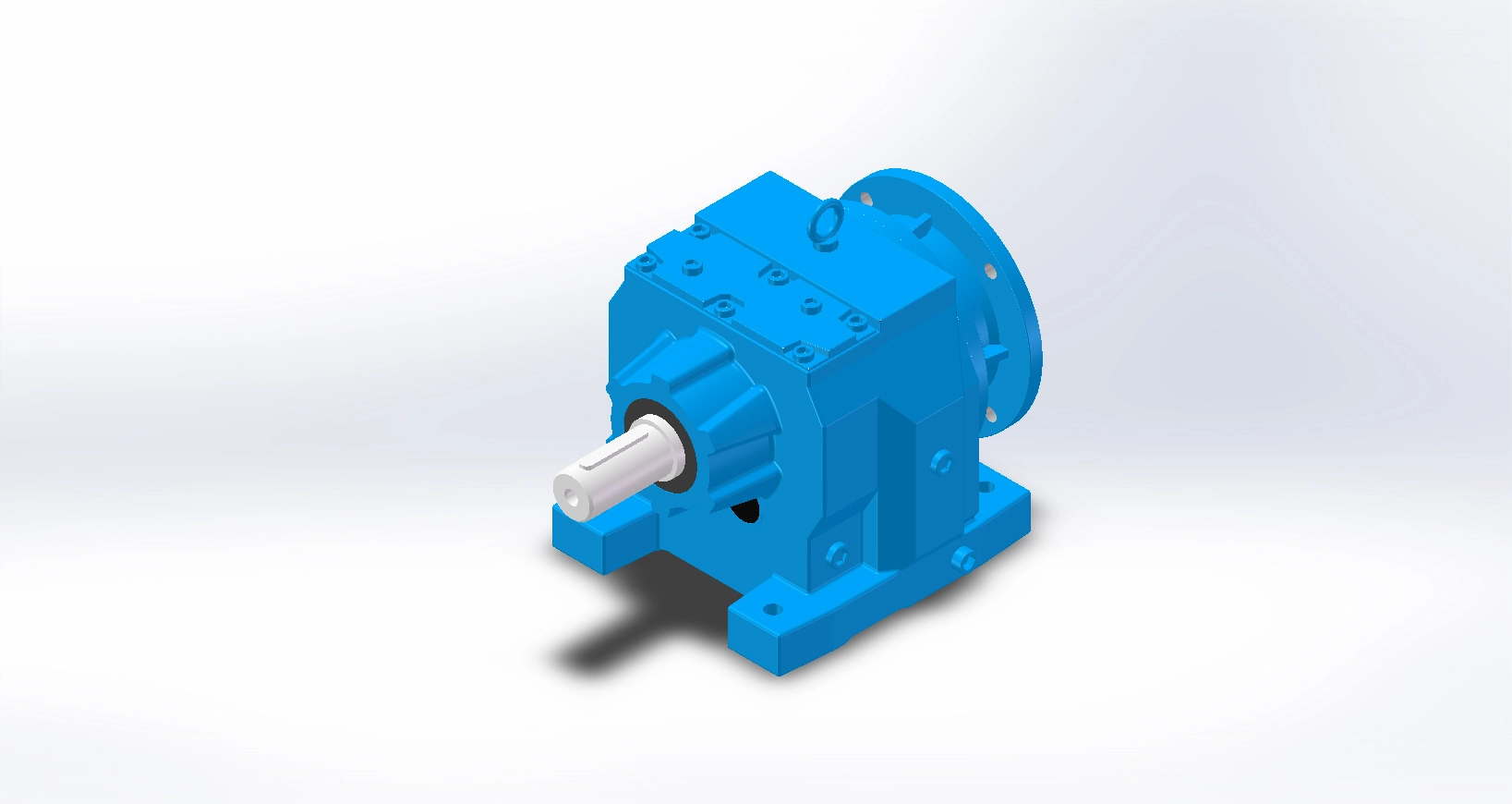
Many industrial machines are designed with limited installation space. Equipment manufacturers often need transmission systems that fit into compact layouts.
Inline helical gear reducers are designed with coaxial input and output shafts, allowing them to be installed directly in line with the motor.
This arrangement simplifies mechanical design and saves valuable installation space.
The coaxial design of an inline reducer allows it to integrate smoothly with motors and driven equipment.
Because the shafts share the same axis, the mechanical connection becomes simpler and more efficient.
This layout reduces alignment complexity and improves overall system reliability.
Modern reducer designs often follow modular engineering principles. Modular structures allow manufacturers to configure different gear ratios, mounting options, and output configurations.
For equipment builders and project engineers, this flexibility makes it easier to adapt the reducer to different machines.
Taixing develops reducer solutions with modular design concepts to support diverse industrial applications.
The reduction ratio determines how much the input speed is reduced. Higher ratios produce lower output speed and higher torque.
Selecting the correct ratio ensures that the reducer matches the operating requirements of the machine.
Torque capacity indicates the maximum mechanical load that the reducer can safely transmit.
Industrial equipment often requires reducers with sufficient torque capacity to handle heavy loads without mechanical failure.
Power range also influences reducer selection because it determines compatibility with the motor.
The materials used in gear manufacturing directly influence durability and efficiency.
High-quality gear materials and precision machining improve transmission efficiency and reduce mechanical losses.
Reducer housing design also plays an important role in protecting internal components and maintaining structural stability.
Material handling systems rely heavily on gear reducers to control conveyor speed and provide sufficient torque for moving loads.
Helical gear reducers help ensure smooth and stable operation of these systems.
In packaging and food processing equipment, smooth motion and low vibration are particularly important.
Helical gear reducers provide the precise and quiet operation needed in these environments.
Heavy industries require transmission systems capable of handling large mechanical loads.
Helical gear reducers provide the strength and reliability required for these demanding applications.
Parameter | What It Means | Why Buyers Should Care | Example from Application |
Reduction ratio | Relationship between input and output speed | Determines machine operating speed | Conveyor speed control |
Output torque | Force available at the output shaft | Indicates load capacity | Heavy material transport |
Power rating | Motor compatibility range | Ensures system matching | Industrial drive systems |
Efficiency | Percentage of power transmitted | Affects energy consumption | Continuous production lines |
Mounting style | Installation configuration | Influences system integration | Packaging machinery |
Modern industrial systems often require flexible equipment configurations. Reducers with multiple mounting options allow engineers to design machines more efficiently.
Helical gear reducers are available in several mounting arrangements, allowing them to adapt to different mechanical layouts.
The durability and stability of helical gear reducers make them suitable for a wide range of industrial sectors.
From manufacturing to heavy industry, these reducers support reliable operation in diverse environments.
Many industrial machines operate continuously for extended periods. Transmission systems must therefore provide stable performance over long operating cycles.
Helical gear reducers are well suited for continuous-duty equipment because of their smooth transmission characteristics and strong load capacity.
Efficient mechanical transmission is essential for reliable industrial operation. Equipment that relies on controlled speed and strong torque output requires a transmission system capable of delivering stable performance over long periods of use. A helical gearbox reducer provides exactly this capability by converting high-speed motor rotation into smooth, powerful output suitable for a wide range of industrial machines. At Taixing, our engineering team combines advanced manufacturing technology with deep experience in gear reduction systems to develop reducer solutions that meet modern industrial demands. Our product range includes planetary gearboxes, helical gear units, worm reducers, and inline helical gear reducers designed to improve equipment performance and durability. If your equipment requires reliable speed reduction and torque transmission, Taixing can provide the gear reducer technology needed to support your application. Contact us to learn more about our reducer solutions and how they can enhance your industrial equipment.
A helical gear reducer reduces the rotational speed of a motor while increasing torque output. This allows machines to operate with the correct speed and sufficient mechanical force.
Helical gears have angled teeth that engage gradually, which reduces vibration and mechanical shock during operation. This design produces smoother and quieter motion transmission.
Inline helical gear reducers are widely used in conveyors, packaging equipment, food processing machines, and various industrial automation systems.
They provide smooth operation, high torque capacity, lower noise levels, and reliable power transmission, making them suitable for continuous industrial use.


