


Views: 0 Author: Site Editor Publish Time: 2026-03-20 Origin: Site


Stable valve control depends not only on movement but also on how fast that movement occurs. Excessive speed may cause overshoot, mechanical stress, or unstable flow regulation, while insufficient speed can reduce system efficiency. This is why engineers often focus on how a linear valve actuator reducer adjust speed within an automated valve system. At Taixing, our gear transmission solutions are designed to help industrial equipment achieve balanced motion, combining proper speed control with reliable output force. By integrating reducer technology with actuator systems, operators gain better control over valve movement, allowing industrial processes to run more smoothly and safely.
Valve automation is not only about moving from closed to open as quickly as possible. In many industrial processes, valves must stop at precise intermediate positions to regulate flow, pressure, or temperature. A system that moves too quickly may overshoot the desired position, forcing the controller to constantly correct the movement.
A reducer helps slow the mechanical output of an actuator so that positioning becomes smoother and more accurate. When motion is controlled, the valve stem reaches the required position without unnecessary corrections.
In pipelines, chemical reactors, and industrial control loops, valve position directly affects process stability. Rapid movement can create sudden changes in flow, which may disrupt sensitive operations.
By moderating actuator output speed, a reducer helps prevent sudden system fluctuations. The valve can respond gradually to control signals, allowing the entire system to maintain a more stable operating condition.
Regulating valves operate continuously during many industrial processes. Instead of remaining fully open or closed, they constantly adjust position to maintain optimal conditions.
Because of this continuous modulation, movement speed must be carefully balanced. Too much speed may cause vibration or oscillation in the control loop, while too little speed may delay system response. A reducer ensures the actuator produces the appropriate motion characteristics for these dynamic conditions.
The actuator motor provides the initial rotational energy that drives valve movement. The speed of this motor is influenced by the control signal provided by the automation system.
Control systems may adjust the motor speed based on process conditions. However, motor speed alone does not determine how fast the valve stem moves. The transmission system also plays a critical role.
The gear ratio is one of the most important factors affecting actuator output speed. When gears reduce rotational speed, they simultaneously increase mechanical torque.
A higher reduction ratio typically results in slower output motion but greater mechanical force. This trade-off allows the actuator to move heavy valves with improved control and stability.
Every valve system presents a certain level of resistance. Friction in the valve stem, fluid pressure in the pipeline, and mechanical loads within the system all influence the amount of force required to move the valve.
When resistance increases, the actuator must deliver greater thrust. The reducer ensures that the actuator can maintain stable movement even under heavier loads.
Reducers operate based on a simple mechanical principle. When rotational speed decreases through gear reduction, torque increases proportionally. This increased torque allows the actuator to overcome larger mechanical loads.
For industrial valves, this additional torque is essential. Many valves operate under pressure conditions where significant force is needed to move the stem. The reducer ensures that the actuator can deliver that force without increasing motor size.
Higher output torque generally corresponds with slower mechanical movement. While this may appear to reduce system performance, it actually improves operational stability.
Slower movement provides greater control over valve position. Instead of abrupt motion, the valve moves gradually, allowing the control system to maintain precise regulation of the process.
The design and quality of the reducer influence how smoothly motion is transmitted from the actuator to the valve. Precision gears reduce vibration and ensure consistent mechanical engagement.
When a reducer is properly designed, each movement of the actuator produces predictable results. This repeatability is crucial in automated systems where precise control is required for long periods of operation.
Modern automation systems often allow operators to adjust actuator speed through control signals. By modifying the control parameters, engineers can fine-tune the response of the actuator.
When combined with a reducer, these adjustments become more effective. The reducer stabilizes the mechanical output, allowing the controller to achieve more accurate positioning.
Another method of adjusting actuator speed involves modifying the power supplied to the motor. Changes in voltage or drive settings can alter the motor’s rotational speed.
However, relying solely on motor speed adjustments may not provide the desired level of control. Mechanical reduction ensures that speed changes remain stable and manageable.
In many cases, the most effective way to adjust actuator speed is through proper reducer selection. Different gear ratios provide different combinations of speed and torque.
Selecting the correct ratio during system design allows engineers to match the actuator output with the specific requirements of the valve.
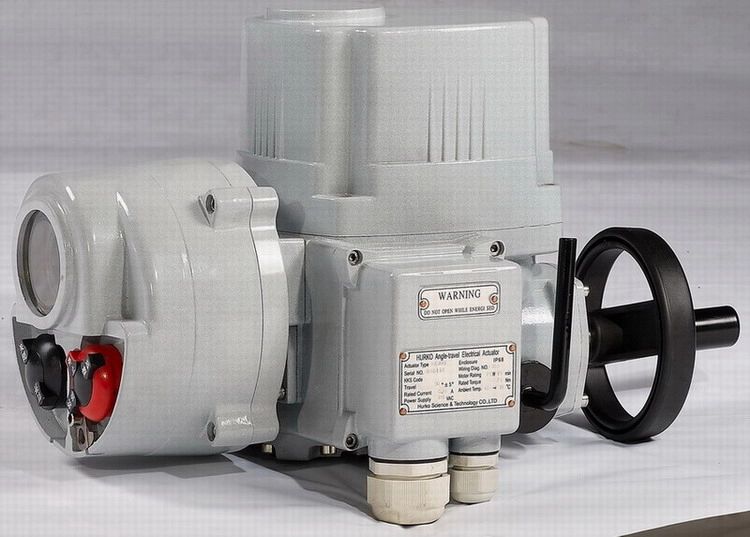
If actuator speed is too high, the valve may overshoot its intended position. This forces the control system to correct the error repeatedly, causing unnecessary wear on mechanical components.
Rapid movement can also create mechanical shock within the transmission system. Over time, this can reduce equipment lifespan.
A system that moves too slowly may struggle to respond to changes in process conditions. When adjustments take too long, production efficiency may decrease.
Operators must therefore balance speed with system responsiveness.
In some cases, the actuator may move at an acceptable speed but still fail to provide stable control. This usually occurs when the reducer ratio or mechanical configuration does not match the valve requirements.
Careful system design helps avoid these problems.
Valves used in simple on-off service typically require less precise motion control. Speed can be relatively higher because the valve only moves between two positions.
Regulating valves require much more precise control. Slower, smoother motion is usually preferred in these systems.
Some valves operate under minimal load conditions, while others must overcome high fluid pressure or mechanical resistance.
Reducers are particularly valuable in high-thrust applications because they allow actuators to deliver stronger output force while maintaining stable movement.
Industrial equipment may operate continuously for extended periods. Frequent actuator starts can increase mechanical stress on components.
Reducers help distribute mechanical loads more evenly, allowing systems to operate more reliably during long service cycles.
Adjustment Method | What It Changes | Main Advantage | Main Limitation | Best Use Case |
Controller tuning | Motor response to control signals | Precise control adjustments | Requires compatible control system | Automated process systems |
Voltage or drive changes | Motor rotational speed | Quick adjustment | Limited mechanical stability | Small system modifications |
Gear ratio selection | Mechanical speed and torque | Long-term stability | Requires design planning | Industrial valve installations |
Combined mechanical and control tuning | Overall system response | Highest accuracy and stability | More complex configuration | High-precision regulating valves |
Many operators initially focus on the actuator motor when adjusting system speed. However, the mechanical transmission system plays an equally important role.
The reducer determines how motor motion is transformed before reaching the valve stem. Without proper reduction, the actuator may struggle to deliver stable output.
Reducers do more than simply slow down motion. They shape the overall behavior of the actuator system.
By balancing speed and torque, a reducer ensures that actuator output remains stable and suitable for the mechanical demands of the valve.
Selecting the correct reducer during system design helps prevent operational problems later. When speed, torque, and load characteristics are properly matched, the entire valve system operates more efficiently.
Proper engineering also reduces maintenance requirements and improves long-term reliability.
Efficient valve automation requires more than simple motion. It requires the right balance between speed, force, and control accuracy. By carefully designing the transmission system, engineers can ensure that valve movement remains stable and responsive under real operating conditions. A well-designed linear valve actuator reducer speed adjustment solution helps achieve this balance by optimizing gear ratios and mechanical output characteristics. At Taixing, we apply advanced gear reduction technology and extensive manufacturing experience to develop actuator reducer systems that support modern industrial automation. Our products are engineered to deliver reliable motion control, stable operation, and long service life in demanding industrial environments. If you are looking to improve valve performance and achieve better control stability, Taixing can provide the reducer technology that supports your application. Contact us to learn more about our gear reducer solutions and how they can enhance your equipment performance.
A reducer controls speed by using gear ratios to decrease rotational speed while increasing torque. This allows the actuator to move the valve stem more slowly and with greater mechanical force.
Speed adjustment ensures that valves respond smoothly to control signals. Proper speed prevents overshoot, improves positioning accuracy, and helps maintain stable process conditions.
Yes. Different gear ratios change both speed and torque output. Selecting the correct ratio allows the actuator system to match the mechanical requirements of the valve.
Yes. Regulating valves require precise motion control to maintain consistent flow conditions. Reducers help achieve this by delivering smoother, more controlled actuator movement.


