


Views: 0 Author: Site Editor Publish Time: 2026-03-16 Origin: Site


Precise valve movement is essential in many industrial systems where flow, pressure, or process stability must be carefully controlled. In these environments, actuators are responsible for moving the valve stem, but the actuator alone does not always provide the right balance of motion speed, thrust, and positioning accuracy. This is where a linear valve actuator reducer becomes an important part of the system. At Taixing, we design gear transmission solutions that help modern industrial equipment operate more smoothly and reliably. A linear valve actuator reducer works together with an actuator to optimize motion transmission, making valve control more stable and predictable. Understanding how this component works and why it is widely used in regulating valves can help engineers and equipment buyers select the right configuration for their systems.
An actuator is the device responsible for generating motion to operate a valve. Electric actuators, pneumatic actuators, and hydraulic actuators convert energy into mechanical movement. However, the actuator itself does not always produce the ideal output characteristics for every application.
A reducer, on the other hand, is a transmission mechanism designed to adjust the relationship between speed and torque. By reducing rotational speed and increasing output force, the reducer ensures that motion delivered to the valve is controlled, stable, and suitable for the process conditions.
When a reducer is integrated with a linear actuator system, the combination improves motion control and load handling. Instead of relying solely on the actuator’s raw output, the reducer shapes that output into a more practical form for valve operation.
Many industrial valves move in a straight line rather than rotating. This linear motion is required to precisely regulate the opening position of the valve. Without a well-designed transmission system, the actuator may produce movement that is too fast, inconsistent, or lacking sufficient thrust.
A reducer helps manage the transfer of energy from the actuator to the valve stem. By adjusting speed and torque characteristics, it enables the actuator to operate more effectively under varying load conditions.
In a typical valve control system, the reducer is positioned between the actuator and the mechanical mechanism that drives the valve stem. The actuator provides the input motion, while the reducer modifies that motion before it reaches the valve. This arrangement ensures the output motion is suitable for precise valve positioning.
The process begins with the actuator motor producing rotational energy. Inside the reducer, gears are arranged to reduce the rotational speed while increasing output torque. This transformation allows the system to deliver stronger mechanical force without requiring a larger motor.
The reduction ratio determines how much speed is decreased and how much torque is increased. Properly selected ratios allow the actuator to operate efficiently while still delivering the required mechanical output.
Although the actuator motor produces rotational motion, many valves require linear movement. The reducer helps convert this rotational motion into controlled mechanical motion that ultimately moves the valve stem up or down.
This conversion often works together with mechanical elements such as screw mechanisms or other motion-transmission components. The reducer ensures that the input motion is delivered at the correct speed and force for reliable linear displacement.
By controlling the relationship between speed and force, the reducer enables smoother movement of the valve stem. Instead of sudden motion or inconsistent travel, the reducer helps deliver gradual and stable displacement. This stability is especially important in regulating valves where even small changes in position can significantly affect process conditions.
Regulating valves are designed to control fluid flow continuously rather than simply switching between open and closed positions. This means the valve must stop at very specific intermediate positions.
A reducer helps achieve this level of control by slowing down motion and increasing available force. As a result, the actuator can position the valve stem with greater precision.
In on-off valve applications, the valve only moves between two positions. Speed and positioning accuracy are less critical in such cases.
However, regulating valves operate in modulating service, where the valve may move repeatedly to adjust flow conditions. These frequent adjustments require stable motion and reliable transmission. A reducer ensures the actuator can handle these repeated operations without excessive wear or instability.
Industrial control systems often demand frequent starts and stops. Each movement must be consistent and predictable. A reducer helps manage these repeated operations by distributing mechanical loads and stabilizing the transmission system.
Without proper reduction, actuators may experience higher stress and reduced operational life.
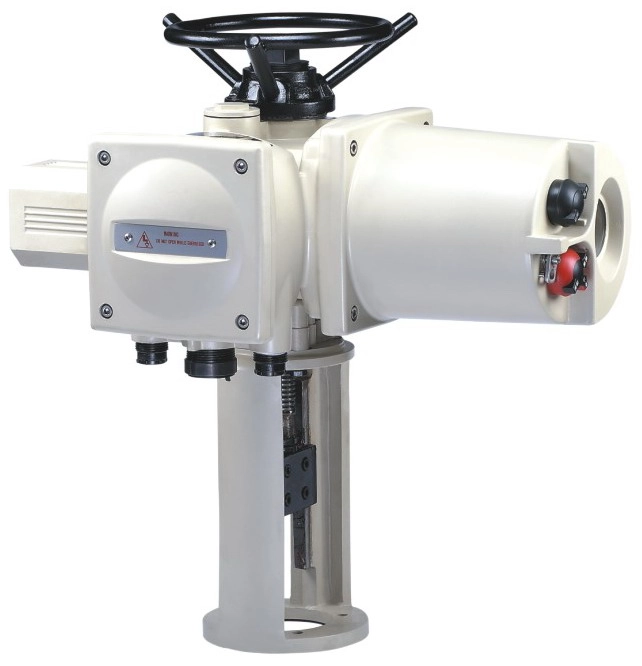
The internal gear set is the core of the reducer. The design and precision of these gears determine how efficiently motion is transmitted. High-quality gears reduce friction, improve durability, and ensure smooth mechanical operation.
Industrial environments can expose equipment to dust, moisture, vibration, and temperature fluctuations. The reducer housing protects internal components from these conditions while maintaining proper lubrication and structural stability.
Reliable sealing systems help prevent contamination and maintain consistent gear performance over long operating periods.
The reducer must work seamlessly with the actuator’s control system. Proper integration ensures the actuator can deliver the required stroke length and output torque while maintaining precise control over valve movement.
Some valve applications require longer travel than a standard actuator can provide. In these cases, additional transmission support may be necessary to achieve the required stroke length.
Reducers can help adapt the actuator system to meet these demands by optimizing mechanical movement and load distribution.
Heavy-duty valves often require significant thrust to move the valve stem against system pressure or mechanical resistance. A reducer increases output torque, allowing the actuator to operate more effectively without increasing motor size.
In advanced process systems, actuators may operate continuously throughout the production cycle. A reducer helps maintain consistent motion characteristics even under high-frequency operation.
Water treatment facilities rely on accurate valve positioning to regulate flow rates and maintain system stability. Reducers help ensure valves respond smoothly to control signals.
Large industrial facilities often operate under demanding conditions where valves must function reliably for long periods. Reducers improve actuator performance and reduce mechanical stress.
Continuous production lines require stable equipment performance. A reducer helps ensure actuators maintain consistent movement throughout long operational cycles.
Different valves require different motion characteristics. Understanding whether the valve operates in regulating or on-off mode helps determine the appropriate actuator and reducer configuration.
These technical parameters directly influence reducer selection. Accurate specifications ensure the reducer matches the operational demands of the valve system.
Industrial equipment often operates in confined or challenging environments. The reducer design must accommodate installation constraints while maintaining reliable operation.
Item | Basic actuator setup | With reducer support | Why it matters to valve control |
Motion control | Faster but less controlled | Slower and more stable | Better positioning accuracy |
Output force | Limited by motor | Increased through reduction | Handles heavier loads |
Operating stability | More vibration possible | Smooth transmission | Improves reliability |
Application range | Simple valve operation | Suitable for regulating valves | Supports complex control |
Service life | Higher mechanical stress | Reduced stress on components | Longer operational life |
Industrial valve systems require more than simple motion. They demand precise positioning, stable operation, and reliable performance over long service periods. A linear valve actuator gearbox plays a crucial role in achieving these goals by optimizing the relationship between speed and torque in valve control systems. At Taixing, we apply extensive experience in gear reduction technology to design solutions that support modern industrial automation and process control. Our engineering expertise allows us to deliver reducer systems that improve actuator performance and help equipment operate more efficiently. If you are planning a valve control project or upgrading an existing system, Taixing can provide the gear technology needed to support reliable linear motion. Contact us to learn more about our actuator reducer solutions and how they can enhance your equipment performance.
A linear valve actuator reducer modifies the motion generated by an actuator by reducing speed and increasing torque. This allows the actuator to move the valve stem more smoothly and with greater force, improving positioning accuracy in regulating valves.
A reducer is often required when the valve needs higher output force, more precise control, or stable operation under frequent adjustments. It is particularly useful in regulating valve applications where accurate positioning is essential.
Yes. By distributing mechanical loads and reducing stress on the actuator motor, a reducer helps extend the service life of the entire actuator system and improves overall operational stability.
They are widely used in water treatment, petrochemical plants, power generation facilities, and other industrial systems where accurate valve control and dependable motion transmission are critical.


