


Views: 0 Author: Site Editor Publish Time: 2026-03-23 Origin: Site


Valve automation systems depend on precise mechanical movement. When a valve actuator does not reach its full stroke, the entire control system may suffer from unstable performance or reduced regulation capability. Many engineers first notice the problem when a valve fails to open or close completely, or when the control range becomes smaller than expected. In many industrial installations, this situation is described as the reduced travel of linear valve actuator reducer. At Taixing, we design gear transmission systems that support accurate and reliable actuator performance across a wide range of industrial applications. Understanding why reduced travel occurs and how it can be solved is essential for maintaining proper valve control and protecting equipment reliability.
Every actuator is designed with a specific rated stroke length. This value represents the maximum distance the actuator can move the valve stem under normal conditions. However, the actual operating stroke in a real system may be smaller than the rated stroke.
Reduced travel occurs when the actuator system cannot reach the full designed movement range. Even though the actuator may still move the valve, the available travel distance becomes limited.
When this happens, the actuator may stop before the valve reaches its intended position. This difference between theoretical capability and actual operation often signals a deeper mechanical or configuration issue.
In many cases, reduced travel becomes visible through valve performance problems. The valve may fail to open completely, limiting the flow capacity of the pipeline. Alternatively, it may fail to close tightly, causing leakage or poor shutoff performance.
Operators may also notice that control signals do not produce the expected change in flow rate. The valve seems to move, but the process response is weaker than expected.
These symptoms indicate that the mechanical movement of the actuator is not covering the full required range.
Regulating valves require precise and repeatable movement across the entire stroke range. If the actuator cannot reach the full travel distance, the control system loses part of its adjustment capability.
This limitation reduces the effective control range of the valve and may force the system to operate outside its optimal control conditions.
One of the most common reasons for reduced travel is incorrect actuator sizing. If the actuator’s rated stroke is shorter than the valve stem travel requirement, the actuator will naturally stop before reaching the full valve position.
This mismatch often occurs during equipment selection when the valve specifications are not fully matched with the actuator design.
Modern actuator systems often include positioners that control the movement of the valve stem. If the positioner is not properly calibrated, the actuator may stop prematurely even though mechanical travel is still available.
Incorrect travel settings can also restrict the motion range of the actuator. In such cases, the system behaves as if the actuator has limited stroke, even though the hardware is capable of full movement.
Mechanical linkage between the actuator and valve stem must be properly aligned. If the connection is installed incorrectly, the actuator may reach a mechanical limit before the valve completes its intended motion.
Improper installation can therefore create artificial travel limitations that reduce system performance.
Mechanical friction is another factor that can restrict actuator movement. Over time, valve stems and internal components may develop resistance due to wear, corrosion, or contamination.
When resistance increases, the actuator may struggle to deliver the required motion. Even if the actuator attempts to move further, friction may prevent the valve from reaching its full position.
Misalignment between the actuator and valve assembly can also increase mechanical resistance.
Many actuator systems include mechanical travel stops designed to prevent excessive movement. These safety mechanisms protect the valve from mechanical damage.
However, if travel stops are incorrectly set during installation or maintenance, they may limit the actuator movement prematurely.
This situation often creates the appearance of reduced travel even though the actuator itself is functioning normally.
Inside the reducer, gears and transmission components must work smoothly to transfer motion from the actuator motor to the valve stem. Over time, mechanical wear may create backlash or reduce transmission efficiency.
These internal issues can affect how motion is delivered to the valve system. In severe cases, the actuator may rotate normally while the actual linear movement becomes limited.
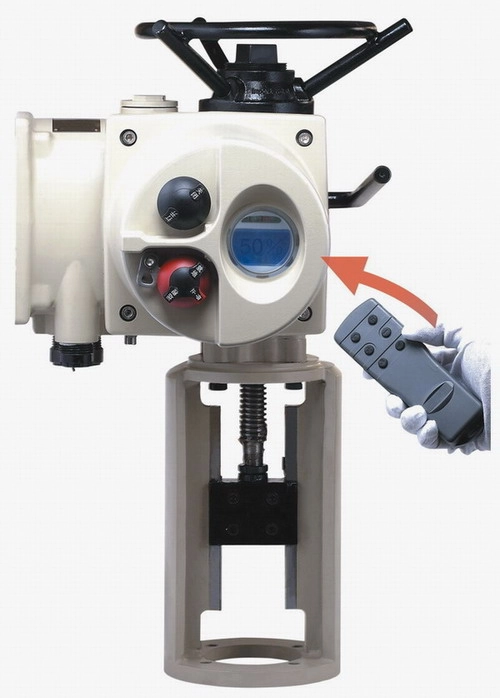
Valves operating under high pressure conditions often require significant force to move the stem. If the actuator does not provide enough output force, the valve may stop moving before reaching the full travel distance.
Reducers help increase output torque, but if the overall system is not properly matched to the load conditions, the actuator may still struggle to overcome resistance.
Automation systems rely on control signals to determine actuator movement. If these signals are incorrect or improperly calibrated, the actuator may receive incomplete instructions.
Signal errors can cause the actuator to stop earlier than expected, creating the appearance of mechanical travel limitation.
Industrial actuators often operate under demanding conditions involving frequent starts and stops. Over time, repeated mechanical stress may affect system stability.
Unstable operation can interfere with the smooth transmission of motion through the reducer system, reducing the effective travel of the actuator.
Reduced travel can prevent the valve from reaching its fully closed position. In many industries, incomplete shutoff can lead to leakage or inefficient process control.
Similarly, incomplete opening may restrict system capacity by limiting flow rate.
Regulating valves rely on precise positioning to maintain stable process conditions. When actuator travel is limited, the valve cannot respond accurately to control signals.
This instability may lead to fluctuating flow conditions and inconsistent system performance.
A valve system operating with reduced travel often experiences increased mechanical stress. Components must work harder to compensate for limited motion.
Over time, this can lead to higher maintenance requirements and greater operational risk.
The first step in troubleshooting reduced travel is comparing the actuator’s rated stroke with the valve’s required movement distance.
If the actuator stroke is shorter than the valve requirement, the problem is clearly related to system design rather than mechanical failure.
Next, technicians should inspect the mechanical linkage between the actuator and valve stem. Improper mounting geometry can restrict movement and create travel limitations.
Correct alignment ensures the actuator can deliver its full motion range.
Finally, calibration of the actuator positioner and control system should be verified. Correct calibration ensures that the actuator responds accurately to control signals.
Many reduced travel problems can be resolved simply by adjusting system settings.
In some cases, the valve requires more travel than the actuator system can provide. Instead of replacing the entire actuator, a gearbox extension can help increase mechanical capability.
Reducers can modify the transmission characteristics and improve the available output movement.
Heavy-duty industrial valves often require both increased thrust and improved motion control. Adding a gearbox solution allows engineers to optimize both factors simultaneously.
This approach provides stronger mechanical output while maintaining stable movement.
Replacing an entire actuator system can be costly and time-consuming. In many cases, upgrading the reducer or transmission component is a more efficient solution.
A properly designed reducer system can restore the full operational capability of the valve while minimizing downtime.
Symptom | Likely Cause | Operational Impact | First Inspection Point |
Valve cannot fully open | Actuator stroke too short | Reduced system capacity | Check actuator specifications |
Valve fails to fully close | Incorrect travel limit | Leakage or poor shutoff | Inspect travel stop settings |
Slow or incomplete motion | Mechanical friction | Reduced efficiency | Inspect valve stem alignment |
Movement inconsistent | Control signal problem | Unstable process control | Verify calibration and control signals |
Actuator rotates but travel limited | Transmission wear | Reduced mechanical output | Inspect reducer components |
Reduced actuator travel should never be ignored because it directly affects valve control capability and overall system reliability. When a valve cannot reach its full motion range, the control system loses part of its operational flexibility and process performance may suffer. Addressing this issue requires careful evaluation of actuator sizing, installation alignment, mechanical transmission, and control calibration. A properly engineered linear valve actuator reducer stroke limitation solution can help restore full travel and improve the stability of valve automation systems. At Taixing, our gear reduction expertise and advanced manufacturing capabilities allow us to deliver actuator reducer solutions that support reliable motion control across demanding industrial environments. Our gear technology is designed to enhance actuator performance and extend equipment lifespan. If you are facing travel limitation issues in your valve control system, Taixing can provide the engineering support and reducer technology needed to solve the problem. Contact us to learn more about our reducer products and how they can improve your actuator system performance.
Reduced travel may occur due to incorrect actuator stroke selection, mechanical misalignment, calibration errors, or excessive friction inside the valve system.
Yes. A properly designed reducer can improve torque transmission and help optimize actuator motion, allowing the system to operate more effectively.
Common signs include incomplete valve opening or closing, unstable process control, or actuator movement that stops earlier than expected.
Not necessarily. In many cases, the problem is related to installation settings or system configuration rather than equipment damage. Proper troubleshooting can often identify and resolve the issue quickly.


